My C3 Journey: 20 Years of Learning, Laughing and Leaping: Part 3
Over the last couple of months, I’ve been reflecting on the now 20 years that C3 has existed, and it’s truly interesting to walk that not-very-straight path again. During January, I’ll continue to reflect and share lessons learned on the journey in two more short essays, and along the way, we’ll celebrate two decades with C3 .
.
If you haven’t yet read parts 1 and 2, you can quickly catch up here. (Part 1, Part 2)
Part 3:
Learning new things has always been such a joy for me, ever since I was a child. Well, to clarify—learning things that were meaningful to me and that I was interested in, things I chose myself to (hyper)focus on . This became an advantage when, quite frankly, I ran into what I thought was a big problem during the first few years of getting C3 up and running. As I mentioned in part 2, I started C3 six months after graduating with my master’s from university, and I had never had a ‘real’ job before that. You know, an 8-4 office kind of real job. I didn’t know how the workplace worked from the inside, and I felt quite embarrassed by this lack of experience.
I had to turn this fact upside down and use it as an advantage. So on one side, I told myself that I knew much more about Chinese culture and Cultural Intelligence than the people I was working with—that's why they called me! On the other side, I was painfully aware that I didn’t know enough about the working cultures in the teams and departments I was delivering cultural training to. This approach actually became one of the fundamentals in the C3 cultural training model: the concept of ‘being aware of your Known Unknowns.’
To balance my lack of experience, I hit the books and made sure that I became a specialist in the field I built C3 around. I studied more about Cultural Intelligence and the fields of blind spots, biases, and how the brain’s automatic responses work. I realized that combining these two areas was relevant and added a deeper, powerful layer to our cultural training programs. It marked the beginning of an amazing ongoing learning journey into neuroscience and how to make the brain your co-player in cross-cultural communication and collaboration. This is SOOO exciting and continues to thrill me . Read a favorite blog post about this topic here: C3 Blog Post.
Over the years I got certified as a process consultant, I studied advanced hypnotherapy coaching, brain-based teaching and habit changing, EQSQ leadership and got certified within the neuropsychology coaching system. When I recently was diagnosed with ADHD and atypical autism I was asked if I had any ‘special interests’ – oh yes, I could answer with a smile .
.
Together with the growing team of C3 trainers, I enjoyed the continuous development of our products, cultural models, and especially our facilitation skills and approach. I could see that one of the keys to C3's success was being practical, keeping advice relevant and creating easy-to-use hands-on visual models.
Fifteen years ago, I was in a beautiful hotel north of Copenhagen, working with an international leadership group. They challenged me to be (too!) specific about cultural characteristics of Denmark and other cultures we were working with. I utterly wanted to give them what they asked for while ensuring we remained flexible and dynamic. Like many other cultural facilitators, I had learned about Hofstede and his cultural model, but to be frank, it never really grew on me.
I clearly remember the exact moment when I was standing strong next to the flip chart, saying to the managers: "Let me introduce you to a cultural model I’ve been working on for a while (well, actually developing here and now ). I call it the 3R model.” I explained the model and provided concrete and nuanced examples and they loved it. I drove home from the workshop carrying an amazing (yes, I’m biased) framework to understand and explain the dynamics and specifics of cultures when comparing them. Little did I know how that epiphany would dramatically influence the consolidation of C3 as a strong competitor in this field. Soon after, I presented the model to a professor I collaborated with, and he suggested adding a fourth R for Relationship, so now we have a 4R framework. Thousands of people all over the world have been trained to use this model as their go-to tool for making the best of their cultural collaborations. Many international facilitators have also been trained to use it in their own cultural facilitations and love it, as it’s so simple to teach and learn.
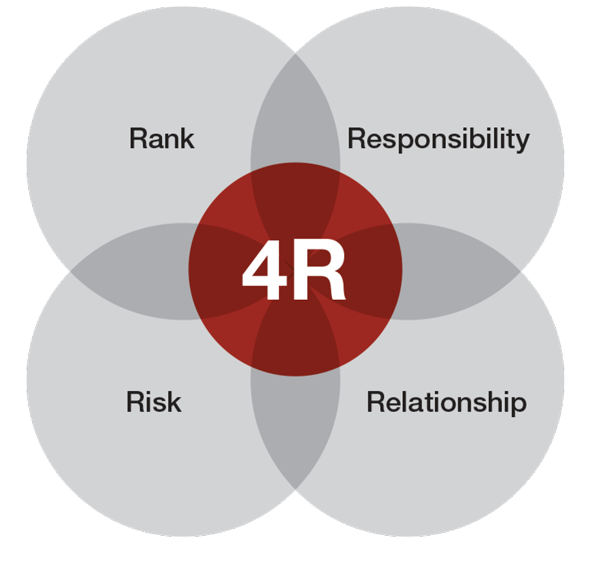
One of my favorite pieces of feedback on using it comes from Bjarne, a Senior Director I’ve worked with several times. He calls the 4R model his ‘Cultural Swiss Army Knife’: “It’s handy, always in the back of my mind, and I can choose which R to use in every kind of cross-cultural situation.” What’s not to like?
Last year, we launched the online course ‘Your Cultural GPS’, where the 4R model is in focus. We spent more than two years (and way too much money) developing it, and I’m super proud of the result. I’m really enjoying the kind words people have about the 4R model and their takeaways from the course .
.
Alright, the classic Danish Jantelov is creeping up on me now. I don’t want to brag about what we accomplished, but at the same time, looking back, I see that what we did was quite fantastic. To balance out the awesomeness, let me add to the story that t was super hard and nerve-wracking to make sure there was a flow of clients coming in, I got divorced along the way, worked way too much (and was proud of it), thought constant development was the only way forward, and only told a few friends when I was stressed out. So, a bumpy road? Yes.
Lessons from my journey Learn to reframe a challenging condition Success is not equal to the number of weekly working hours (I wish I'd learned that sooner)
|  |